March 13, 2026

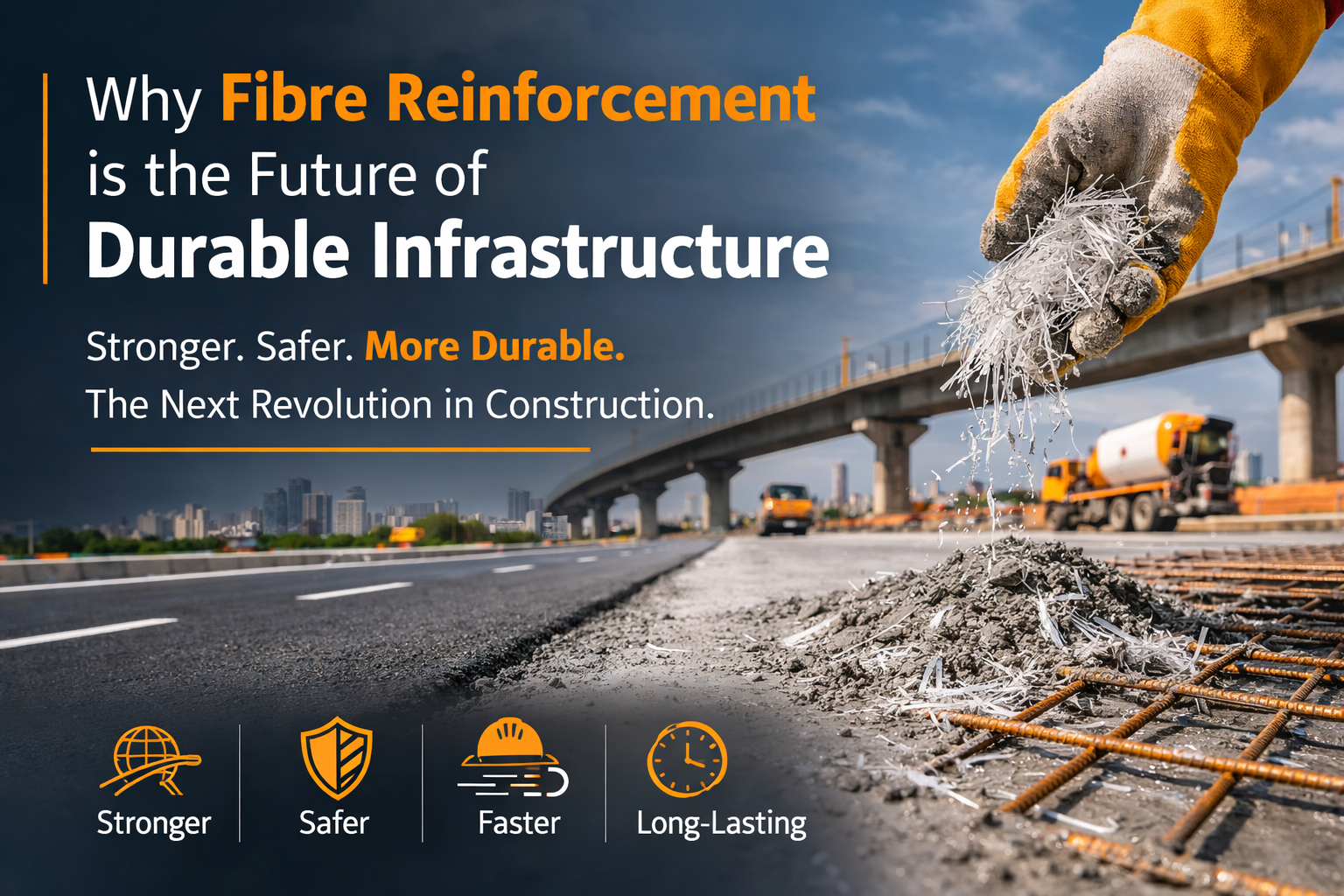
Concrete is one of the most widely used construction materials in the world. It is known for its strength and durability, but traditional concrete can sometimes develop cracks and structural weaknesses over time. To overcome these challenges, the construction industry has adopted advanced fibre technology.
Fibre reinforcement has become an important solution for improving the performance and lifespan of concrete structures, especially in large infrastructure projects.
Fibre technology involves adding small, specially designed fibres into the concrete mix. These fibres are distributed throughout the concrete and act as reinforcement within the structure.
Unlike traditional reinforcement that focuses on specific areas, fibre reinforcement strengthens the entire concrete matrix, providing better structural performance.
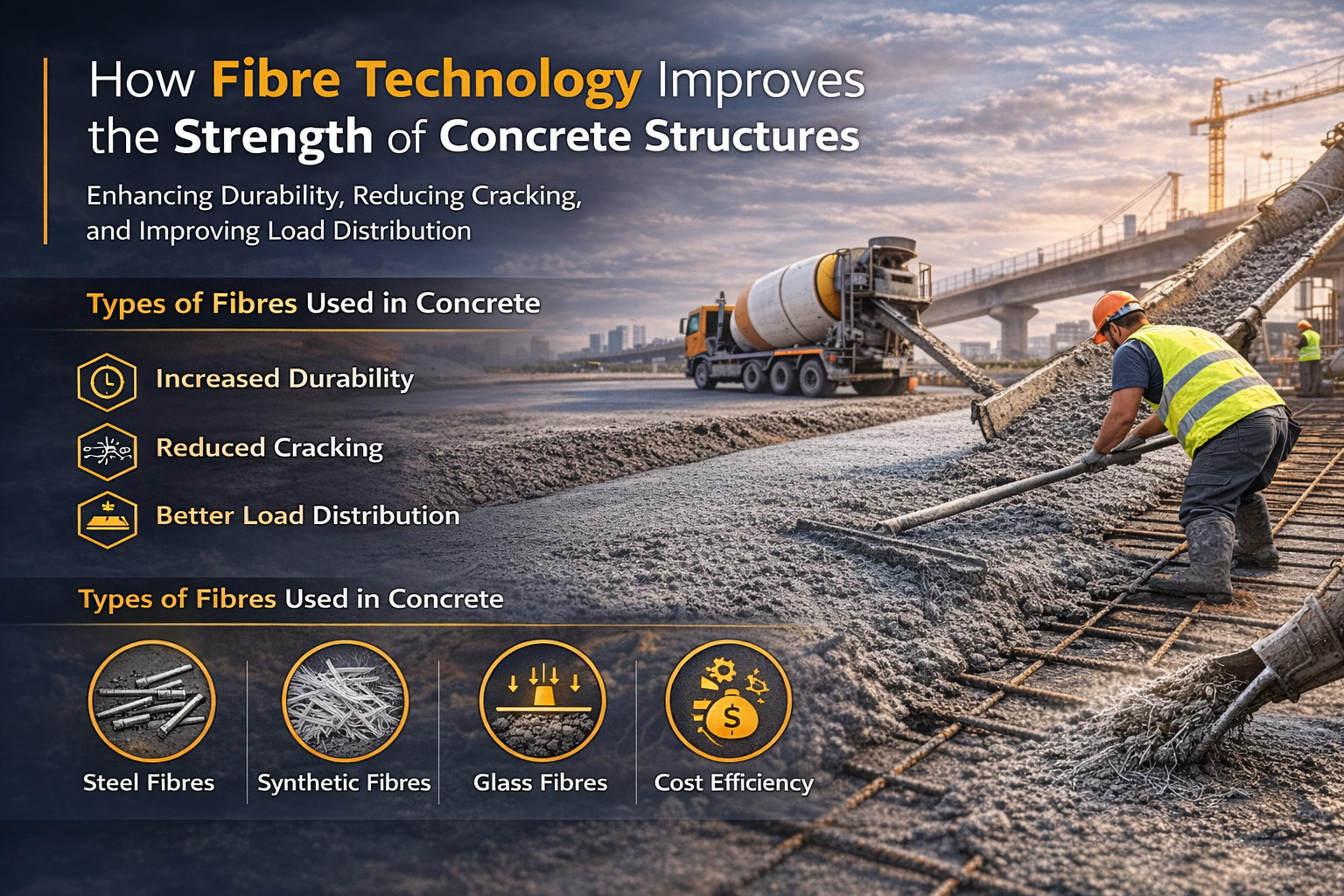
Different types of fibres are used depending on the requirements of the project.
Steel fibres are commonly used in heavy-duty construction projects such as industrial floors, highways, and airport runways because they provide excellent strength and load resistance.
Synthetic fibres help control plastic shrinkage cracks in concrete and improve the durability of structures.
Glass fibres are lightweight and corrosion resistant, making them suitable for certain specialized construction applications.
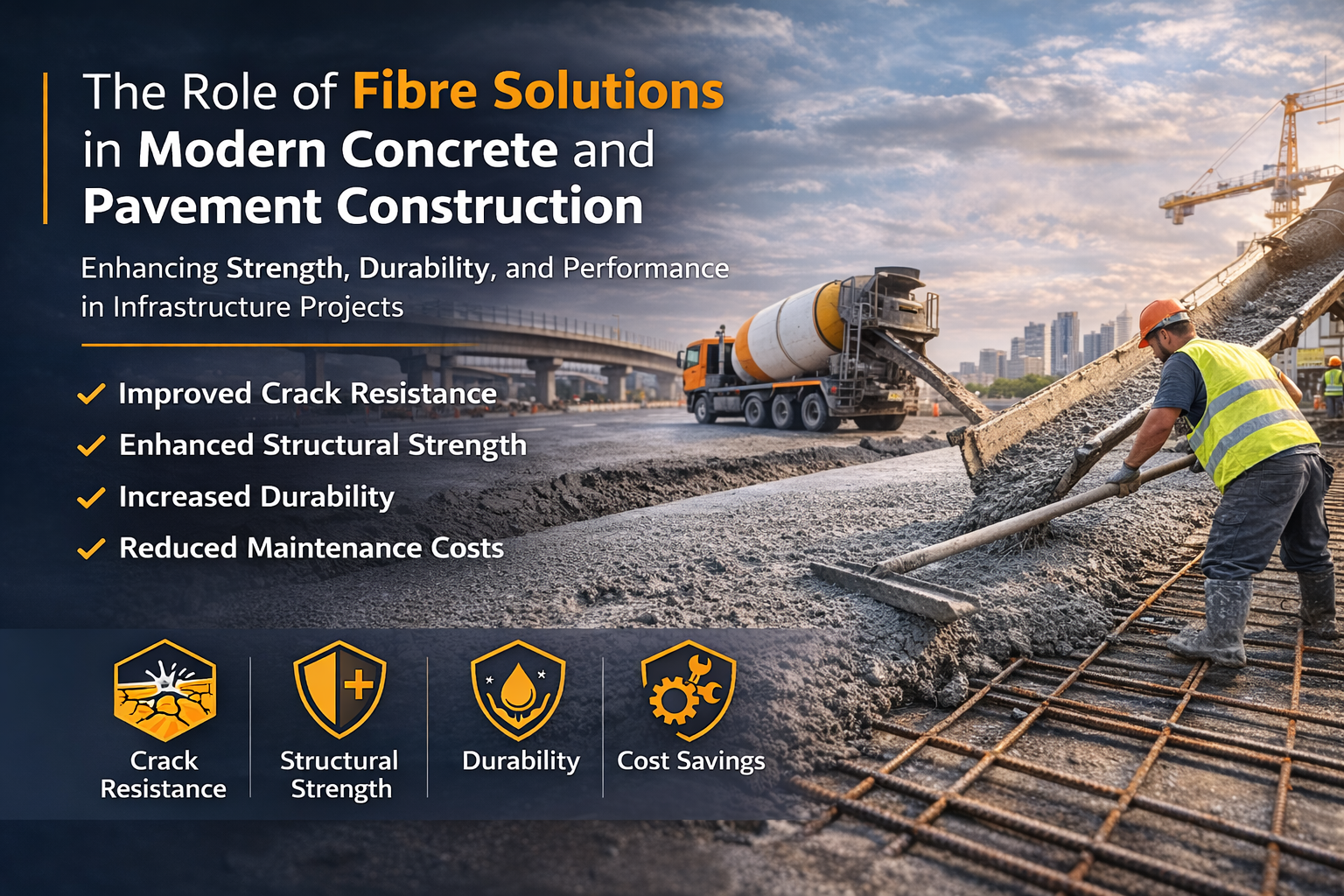
Fibre reinforced concrete improves resistance to wear, impact, and environmental conditions, which increases the life of the structure.
Fibres help control micro-cracks in concrete and prevent them from spreading into larger structural cracks.
Fibres distribute stress evenly throughout the concrete structure, improving overall performance under heavy loads.
By improving durability and reducing maintenance requirements, fibre reinforced concrete can significantly lower long-term infrastructure costs.
Fibre reinforced concrete is widely used in several important construction areas:
Highway and road construction
Industrial flooring
Tunnel linings
Airport pavements
Bridge construction
These applications require strong and reliable materials that can withstand heavy loads and long-term usage.